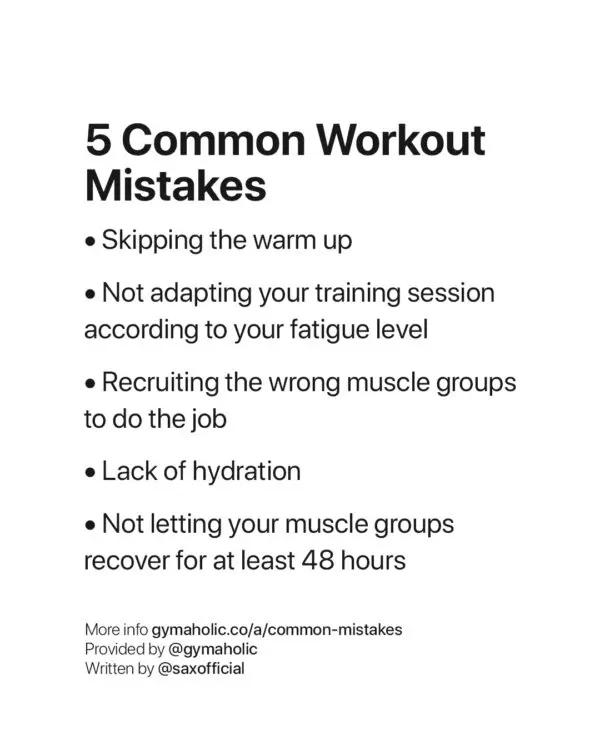
5 Common Workout Mistakes
We all want results yesterday.
We tend to rush our way to our goals.
However, this approach can lead us to make mistakes, which may cause injuries in the long run.
Obviously, you won't get everything right, but you can limit the mistakes you make along the way.
In this article we will explain 5 mistakes most people make and how to prevent them:

You just started a workout, your pre-workout kicks in, and you're excited to increase the intensity of your workout.
You're mentally ready, your body isn't.
That's why it's important to warm up using dynamic and light static stretching.
Warm up your body before increasing the intensity of your workout.
Adherence is the ability you have to stick to your training plan.
In a perfect world, you feel good every day, and you're always energized to complete your workout.
However, life doesn't work that way; there are days you will feel exhausted after work, or have an emergency.
This indirect stress will also have an impact on your performance.
Adapt your workout according to your stress and fatigue level.
Last week you were able to do a 40 lbs bicep curl, but this week you're struggling with 20 lbs.
It would be tempting to add a "little help" from your shoulders to be able to lift 40 lbs again.
That's what we call "cheat reps", they can be beneficial if you are a pro athlete from time to time.
However, most of us (even myself) do these unconsciously, but it could cause certain muscle groups to be used when they shouldn't.
Perform exercises with good form and avoid cheat reps, they can lead to injury.
Staying hydrated is necessary to control body temperature, cushions organs/joints and much more.
The more active, the more fluid your body needs to perform at its best.
Recovery is as important as working out.
Overtraining is real, and without rest, your muscles will not grow to their fullest potential.
However, active recovery is recommended, e.g. doing a light jog after a leg workout you've done the day before.
When you train a muscle group to failure, it needs at least 48 hours to fully recover.
Even after exercising for more than 9 years, I'm prone to make mistakes.
However, with experience, you become more aware and wise with your training.
Rest muscle groups is the most difficult for me, because I run, cycle and sometimes play soccer on the same day.
The ultimate goal is to be patient and to leave your ego outside your workouts.
I hope this article will prevent you from making these mistakes moving forward.
Remember, it's a lifestyle, you're in it for the long run.
Frequently Asked Questions
Warming up is crucial as it prepares your body for the physical demands of exercise, reducing the risk of injury and improving performance. It helps increase blood flow, flexibility, and range of motion, making your workout more effective.
Listen to your body and modify your workout intensity according to how you feel. If you're fatigued, consider focusing on lighter exercises or incorporating rest days to prevent burnout and enhance recovery.
Cheat reps involve using improper form or additional muscle groups to complete a movement, which can lead to injury if overused. Focus on maintaining good form to ensure you target the correct muscles effectively.
Staying hydrated is vital for maintaining optimal body function, including temperature regulation and joint lubrication. Drink water regularly before, during, and after workouts to support your performance and recovery.
It's recommended to allow at least 48 hours for muscle recovery after training a group to failure. This recovery period helps muscles repair and grow stronger. Active recovery, like light jogging, can also aid in the process.
Common mistakes include skipping warm-ups, not adapting workouts to fatigue levels, using improper form, neglecting hydration, and not allowing adequate recovery time. Addressing these can enhance your workout effectiveness and safety.
To improve your routine, ensure you warm up properly, tailor workouts to your daily energy levels, maintain proper form, stay hydrated, and prioritize recovery. For more tips on effective training, check out 3 Training Habits That Will Help You Make Better Progress.