Why You're Always Hungry
We all have busy lives.
We're often stressed, sleep deprived and end up always feeling hungry.
Overeating is common if you don't have healthy habits to keep your hunger in check.
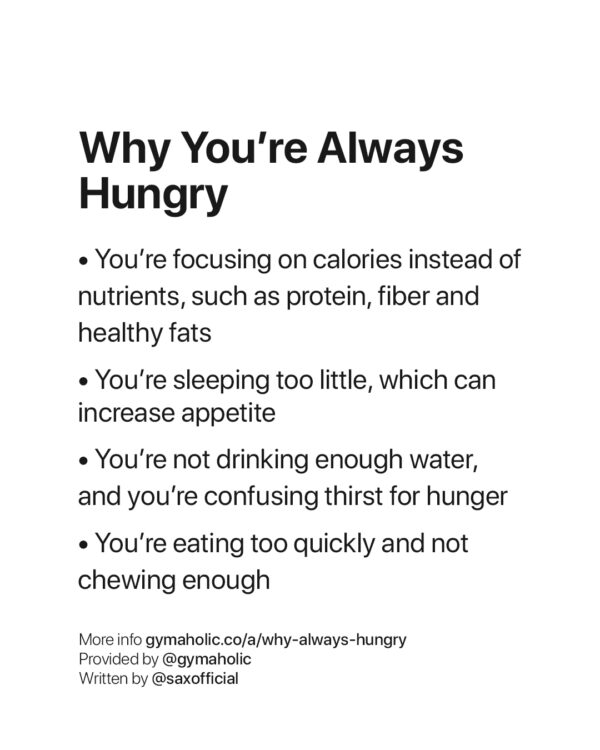
Here are the top 4 healthy ways to help you reduce hunger and appetite.

We've all heard this saying: as long as it hits your macros
However, not all calories are created equal.
What that means is, eating 100g of cooked lentils is not the same as eating 100g of white bread.
They obviously have different calorie intake, but they also differ in fiber content.
Nutrients like protein, fiber and healthy fats tend to take longer to digest and make you feel full longer.
This is why whole foods are more filling than processed foods.
Focus less on calories and more on nutrients such as protein, fiber and healthy fats.
Research has shown that sleep deprivation can have a negative impact on your ability to feel full.
Leptin is a hormone that tend to drop when you're stressed and sleep deprived, and it regulates things like: metabolism, energy balance and food cravings.
Aim to get 7-9 hours of sleep to regulate your leptin levels and avoid having a huge appetite.
Staying hydrated is important for your overall health.
It helps with muscle functions, body temperature, etc.
Moreover, drinking water helps you regulate your appetite.
Drink 9-12+ cups of water to avoid confusing thirst for hunger.
The slower you eat, the fuller you will feel.
On average, we're supposed to chew 32 times to properly digest most foods.
I don't about you, but when I feel rushed, my average is about 10 times or less.
A great way to slow down is to drink water while you're eating.
Take your time to eat, and you will feel fuller and increase your ability to absorb nutrients.
I've dealt with severe sleep deprivation, and no matter how disciplined I was, I always felt hungry.
I was able to more or less manage my weights by being active, but my eating habits were not sustainable.
Then I made major changes to my lifestyle:
- Prioritize sleep (7-9 hours)
- Drink less alcohol
- Eat more whole foods than processed foods
- Move every day
- Reduce stress by meditating and journaling
- Etc.
We all have different lifestyles, and it's important to find what works best for you.
Give these healthy tips a try if you want to reduce hunger and avoid overeating.
Frequently Asked Questions
Feeling hungry after eating could be due to focusing on calorie quantity rather than nutrient quality. Ensure your meals include protein, fiber, and healthy fats to promote satiety and reduce hunger.
Lack of sleep can lower leptin levels, a hormone that regulates hunger. This can lead to increased appetite and cravings. Aim for 7-9 hours of sleep to help manage your hunger effectively.
Yes, staying hydrated can help regulate your appetite. Sometimes thirst is mistaken for hunger, so drinking 9-12 cups of water daily can help you avoid unnecessary snacking.
Eating slowly can enhance fullness and improve digestion. Try chewing your food more thoroughly, approximately 32 times per bite, and incorporate drinking water during meals to pace yourself.
To manage hunger, prioritize adequate sleep, reduce stress through activities like meditation, incorporate more whole foods into your diet, and stay active daily. These changes can help stabilize appetite and improve overall well-being.
Foods rich in protein, fiber, and healthy fats are effective in reducing hunger. Consider incorporating foods like lentils, nuts, and avocados into your meals for longer-lasting satiety. For more ideas, check out Eat Better: What Healthy Foods You Should Have On Your Plate.
Using a fitness app like the Gymaholic App can help you track your nutritional intake, sleep patterns, and workout routines, providing insights into your progress and helping you manage hunger more effectively.